

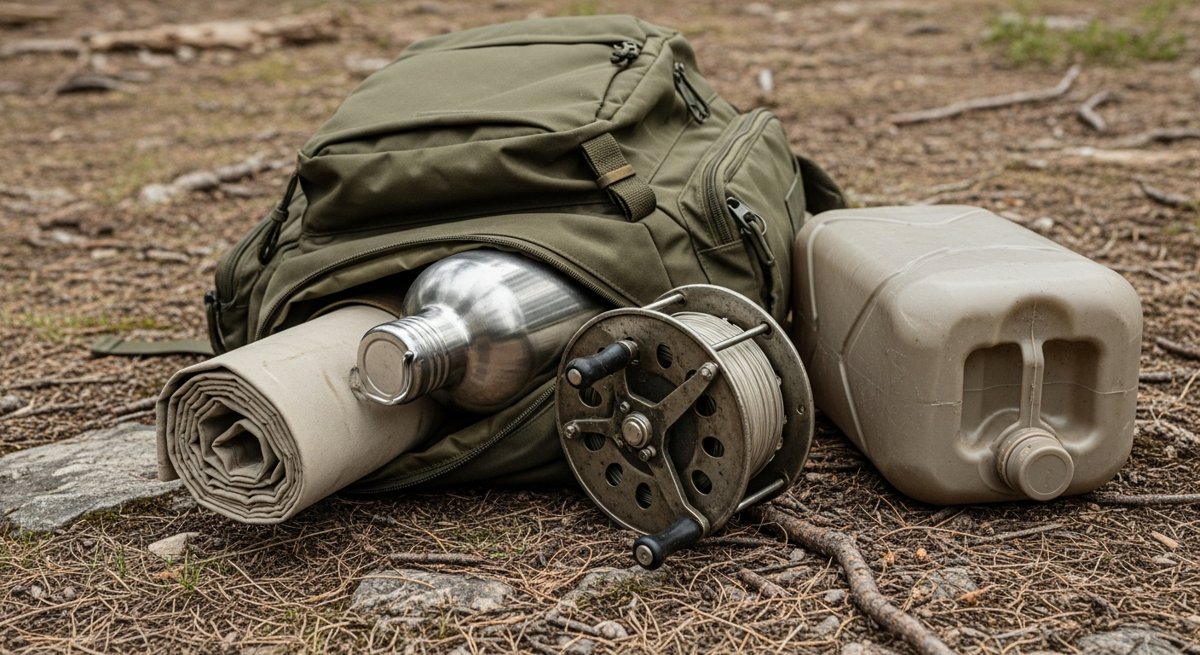
Everybody loves the idea of a bug-out bag right up until they have to carry it. Then reality shows up: the thing weighs 45 pounds, half of it is gear you bought because a YouTube guy with a beard told you to, and you’d be gassed before you cleared your own neighborhood.
So let’s reset. A bug-out bag is not a doomsday survival kit. It’s not a basement prepper stash. It’s one specific thing: a grab-and-go pack that keeps you alive and moving for 72 hours when you have to leave home right now — wildfire, flood, hurricane evacuation, gas leak, chemical spill, whatever. Three days. That’s the window. FEMA picked 72 hours because that’s roughly how long it takes for organized help to reach most disaster zones. Build for that, not for the apocalypse.
The one rule that fixes everything: pack for movement, not for comfort
Here’s the mistake nearly everyone makes — they pack their bug-out bag like they’re packing for a camping trip. Cozy. Complete. Heavy. But a bug-out bag’s whole job is to let you move, possibly on foot, possibly fast, possibly uphill with a kid on your hip. Every ounce is a tax you pay with your legs and lungs.
So before anything goes in the bag, it has to answer one question: does this keep me alive for the next three days, or does it just make me more comfortable? Comfort items get cut. Survival items stay. That single filter will halve your pack weight and double your odds of actually using the thing.
What actually belongs in it
Work through these in order of how fast they’ll kill you if they’re missing. That’s not me being dramatic — it’s the actual priority list. You die in three minutes without air, three hours without shelter in bad weather, three days without water, three weeks without food. Pack in that order.
1. Water — the heaviest problem you have
You need about a liter a day minimum, more if you’re moving or it’s hot. But three days of water is over 6 pounds, and that’s before everything else. The move isn’t to carry 72 hours of water — it’s to carry one day and the ability to make more. Pack a hard bottle you can drink from, boil in, and measure with — a Nalgene 32 oz wide-mouth bottle is the standard for a reason — plus a filter. A Sawyer Mini is the gold standard here: it’s the size of a banana, weighs two ounces, filters 100,000 gallons, and turns every creek, puddle, and gas-station spigot into drinking water. Toss in a few purification tablets as a backup for water too murky to filter.
2. Shelter and warmth — the silent killer
Exposure kills faster than thirst and way faster than hunger, and it does it quietly. You don’t need a tent. You need: a quality emergency bivy or mylar blanket (the heavy-duty kind, not the $1 foil square that shreds in the wind), a contractor-grade trash bag or two (instant rain poncho, ground cover, or water hauler), and a change of wool or synthetic socks. Cotton kills — it holds water against your skin and steals your heat. Wool stays warm wet. Pack a knit hat too; you lose a stupid amount of heat through your head.
3. Fire — two ways, always
Fire is warmth, water purification, signaling, and morale in one. Carry two ignition methods minimum, because the one you’re counting on will fail at the worst moment. A couple of regular Bic lighters (cheap, reliable, carry three) plus a Light My Fire FireSteel that works soaking wet and throws sparks down to -40°F. Add a small tin of cotton balls smeared in petroleum jelly — best cheap firestarter on earth, lights in wind and rain.
4. First aid — built to stop bleeding, not soothe boo-boos
Skip the drugstore kit full of tiny band-aids. In a real evacuation, the injuries that kill you are bleeds. Your kit needs a real tourniquet — a North American Rescue C-A-T tourniquet (the genuine North American Rescue one, not a knockoff that snaps under load), pressure dressing, gauze, and trauma shears. A pre-built Adventure Medical MOLLE trauma kit covers most of this in a grab-and-go pouch. Then add your personal meds, a few days of any prescription, ibuprofen, and antihistamines. And learn to use the tourniquet — under stress, on yourself, one-handed. That’s a real skill, not a vibe.
5. Tools and light
A solid fixed-blade knife does 90% of survival tasks better and safer than a folder — the Morakniv Companion is absurdly good for $20 and the bushcraft world’s not-so-secret handshake. Pair it with a multitool like the Leatherman Wave Plus for the pliers, screwdrivers, and can opener you’ll actually reach for. For light, go hands-free if you can, but at minimum carry a bright, rechargeable flashlight — the Olight Baton3 clips to a pocket, throws over 1,000 lumens, and tops up off the same cable as your phone. Spare batteries or a small power bank round it out.
6. Food — calories, not cuisine
Three days won’t starve you, so don’t overthink it. You want compact, no-cook, high-calorie: energy bars, peanut butter packets, trail mix, jerky. Roughly 1,500–2,000 calories a day is plenty for short-term survival. A small backpacking stove and a couple of freeze-dried meals are a nice-to-have, not a need-to-have. Hot food is morale, and morale matters more than people admit — but it’s still a comfort item, so it goes in last and comes out first when weight’s a problem.
7. Documents, cash, and defense
The boring stuff that saves you: copies of your ID, insurance, and important documents in a waterproof bag. Cash in small bills — ATMs and card readers die when the grid does. A paper map of your region and a charged phone with a backup battery. And for personal defense, carry what you’re trained and legal to carry. At minimum, a SABRE pepper spray keychain gives you a non-lethal option that’s legal in all 50 states and lives on your keychain. Whatever you choose, the rule is the same as everything else here: train with it before you need it.
What does NOT belong in it
Half of building a good bag is leaving stuff out. Cut these:
- The 14-in-1 “survival kit” off the internet — wire saws that snap, compasses that point at whatever, fire starters that don’t. Junk that makes you feel prepared.
- A full week of food. It’s a 72-hour bag. The extra weight buys you nothing in the window that matters.
- Five knives. One good fixed blade and one multitool. Done.
- Heavy “tactical” everything. A 6-pound pack covered in MOLLE you’ll never use is ego, not preparation.
- Anything you don’t know how to use. Gear you can’t operate under stress is just weight with a backstory.
The bag itself
Last, because it’s least important — and yet everyone starts here. You want something in the 25–40 liter range: big enough for three days, small enough that you can’t overpack it (the bag is your weight governor). Comfortable hip belt, durable zippers, and ideally muted colors so you don’t look like a walking supply depot. You don’t need to spend $300. A solid pack from 945 Industries’ EDC bags or any reputable maker beats a bargain-bin bag whose straps blow out on mile two. Whatever you pick, load it up and walk three miles with it before you ever need to. That walk will teach you more about your kit than any article — including this one.
Your challenge this week
Don’t buy anything yet. First, dump everything you think belongs in a bug-out bag onto the floor. Run each item through the one filter: survival or comfort? Cut the comfort pile. Then load what’s left, throw it on your back, and walk three miles. Note what hurts, what rattles, what you forgot, and what you’d kill to leave behind. That’s your real bug-out bag — the one tested by your own two legs, not by a checklist. Build from there.