Creatine: The One Supplement That Actually Works (and How to Take It)

Let me save you about $400 a year. Walk into any supplement store and you’ll see walls of powders promising you everything from “explosive pumps” to “alpha test boosting.” Ninety-five percent of it is hopium in a plastic tub. There is, however, one supplement that has been studied to death for forty years, costs about thirteen cents a day, and actually does what it says. That’s creatine.

I’ll cut to the chase: I take it. My wife takes it. My 60-year-old dad takes it. If you train, lift heavy things, ruck, or just want to age without turning to dust, creatine should already be in your kitchen. If it’s not, you’re being weird about the easiest win in fitness.

What Creatine Actually Is

Creatine isn’t some lab-made chemical from a Russian doping lab. Your body already makes about a gram of it per day in your liver and kidneys, and you pull another gram or two out of red meat and fish. It lives inside your muscle cells where it does one job: donate a phosphate group to ADP, recycling it back into ATP — the molecule that fuels short, hard efforts.

Translation: more creatine in your muscles = more juice in the tank for sets 3, 4, and 5. That’s it. That’s the magic. It’s not a stimulant. It’s not a hormone. It’s a battery that lets you do one or two more reps, which over weeks and months compounds into noticeably more muscle and noticeably more strength.

What the Research Actually Shows

Creatine monohydrate is the most studied sports supplement in human history. Not “most marketed” — most studied. Over 1,000 peer-reviewed trials. The consensus is boring and consistent:

  • 5–15% increase in strength over 4–12 weeks compared to placebo.
  • 1–2 kg of lean mass in the first month (some is water inside the muscle cell — that’s fine, that’s also performance).
  • Better high-intensity work capacity — more reps, more sets, faster recovery between them.
  • Cognitive benefits in sleep-deprived and aging populations — improved working memory and reaction time.
  • Potential neuroprotective effects — promising work in Parkinson’s, depression, and traumatic brain injury, though not conclusive yet.

It’s also one of the safest supplements ever tested. The “creatine destroys your kidneys” myth refuses to die, but if you actually look at the literature you’ll find decades of studies in healthy adults showing zero kidney impact at standard doses. If you have existing kidney disease, talk to your doctor. Everyone else: you’re fine.

Which Type to Buy (Hint: The Cheap One)

Supplement companies have invented at least a dozen “advanced” forms of creatine — HCL, ethyl ester, buffered (Kre-Alkalyn), nitrate, magnesium chelate. They charge two to four times more for them. And in head-to-head trials, every single one of them either performs the same as plain old creatine monohydrate, or worse.

Buy creatine monohydrate. That’s it. If you want to be extra picky, look for “Creapure” on the label — it’s a German-manufactured form with the highest purity certification. A 1 kg tub costs around $30 and lasts six to eight months. That’s roughly 13 cents per day.

Don’t pay $50 for “next-gen pH-optimized hydro-soluble” creatine. The molecule that gets absorbed into your muscle cell is the same either way. It’s literally just marketing with a metallic label.

How to Actually Take It

This is where people overcomplicate the simplest supplement on Earth. Here’s the entire protocol:

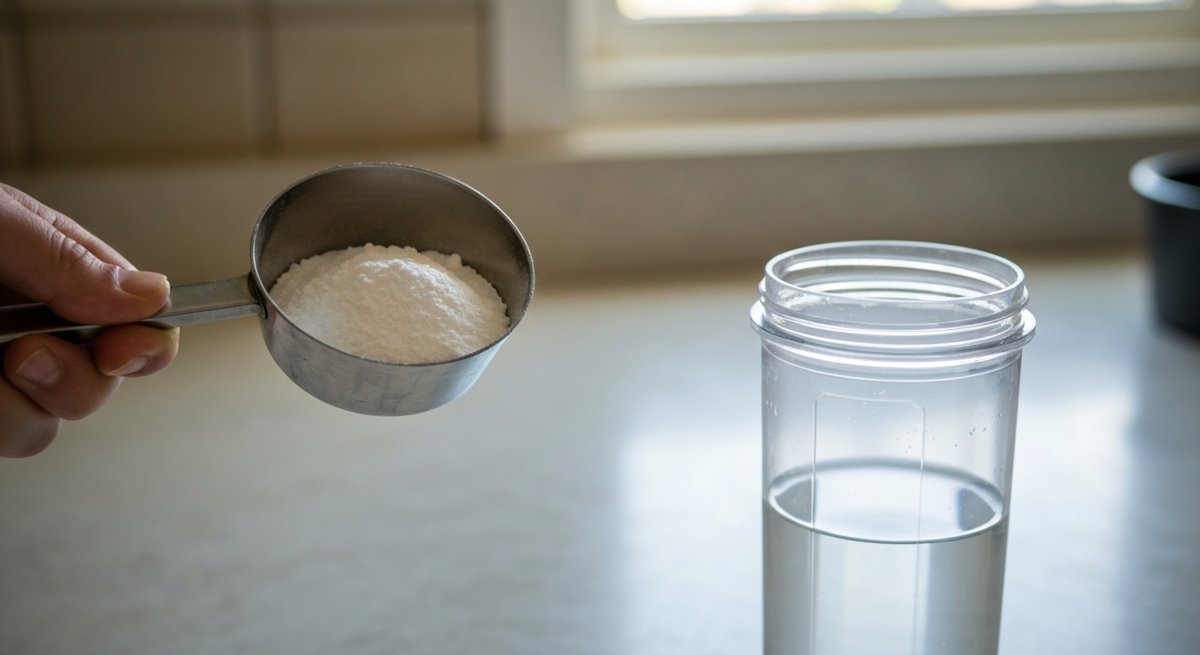
The dose: 5 grams per day. One rounded teaspoon. Every day. Forever.

The timing: Doesn’t matter. Morning coffee, post-workout shake, with dinner — muscle storage builds up over weeks. One missed day means nothing.

The liquid: Water, coffee, juice, protein shake. Doesn’t matter. The “creatine and caffeine cancel out” myth was based on one flawed 1996 study and has been debunked dozens of times since.

Do You Need to “Load”?

Old-school protocols had you slam 20 g/day for 5–7 days to saturate your muscles fast, then drop to 5 g maintenance. It works. It also gives some people stomach upset, and the only thing you gain is reaching full saturation in one week instead of three to four. Same destination, different on-ramp.

If you’re impatient, load. If you’re not, don’t. The end result is identical after a month.

Do You Need to Cycle Off?

No. Your body doesn’t “downregulate” creatine production in any way that comes back to bite you. Take it daily, year-round. Stop only if you stop training and don’t care about the cognitive benefits.

What to Expect (and What’s Hype)

Real, expected effects in weeks 2–8:

  • Your last few reps feel crisper. You’re getting an extra rep or two on heavy sets.
  • Muscles look slightly fuller — that’s intracellular water, which is exactly what you want.
  • Recovery between sets is noticeably better. Less gasping during a 4×8 squat session.
  • Scale might go up 1–3 lbs in the first two weeks. That’s water in muscle. Not fat.

Stuff creatine does NOT do:

  • Make you bloated or “puffy” in the face. It goes into muscle, not under your skin.
  • Cause hair loss. One small 2009 rugby study suggested a DHT bump and the internet ran with it. Never replicated.
  • Replace training. You still have to lift the bar.
  • Turn you into a different human. It’s a 5–15% edge, not a steroid.
The honest framing: Creatine doesn’t build the muscle. Your training does. Creatine just lets you train slightly harder, slightly more often, with slightly better recovery. Over a year, “slightly” turns into “significantly.”

Who Should Be Taking This

Honestly? Almost everyone over 30 who moves their body for a living or a hobby.

  • Lifters and athletes: Obvious. This is what it was made for.
  • Ruckers, hikers, manual laborers: Anything with repeated hard efforts benefits.
  • People over 50: Sarcopenia — age-related muscle loss — is brutal. Creatine plus resistance training is the best one-two punch we have for it.
  • Vegetarians and vegans: You make less endogenous creatine because you don’t eat meat. You’ll feel the difference more than anyone.
  • Anyone chronically sleep-deprived: Parents, shift workers, students. There’s solid evidence creatine helps cognitive performance under sleep deprivation.

The only “maybe skip it” case is a competitive endurance athlete worried about a small water-weight gain affecting power-to-weight ratio. For everyone else, the cost-benefit is absurd.

The Common Mistakes I See

  1. Stopping after two weeks because “it didn’t work.” Saturation takes 3–4 weeks without loading. Be patient.
  2. Buying flavored creatine blends. You’re paying 3x for sugar and dye. Buy plain monohydrate and mix it with whatever you already drink.
  3. Taking it only on workout days. Saturation is a steady-state thing. Daily, including rest days.
  4. Drinking 4 liters of water “to support kidney function.” Drink normal amounts of water. Your kidneys are not in danger.
  5. Doubling up after missing a day. Unnecessary. Just take your 5 g and move on.

My Honest Take

I’m cynical about the supplement industry. Most of it is overpriced placebo dressed up with sponsored athletes who’d look exactly the same without it. Creatine is the exception. It’s the one bottle on my counter that has earned its spot through forty years of replication, not marketing budget.

Five grams. Every day. About thirty dollars every six months. If you train and you’re not on it, you are leaving free strength, free recovery, and probably some free cognition on the table for no reason at all.

Your Challenge This Week

Buy a 1 kg tub of plain creatine monohydrate (Creapure if you can find it, any reputable brand if not). Put it next to your coffee maker. Take 5 grams every morning for the next 30 days alongside your training.

If you don’t notice a difference in the gym by week four, I’ll be genuinely surprised. And if you do — welcome to the boring, effective side of supplementation.

Not medical advice. If you have kidney disease, are pregnant, or are under 18, talk to your doctor first. Everyone else: it’s just creatine, relax.
How Muscle Actually Grows: The Science of Strength, Satellite Cells, and Muscle Memory

Fat cells multiply and never leave. Muscle fibers have a different trick — and understanding it changes how you train, recover, and think about getting stronger.

Muscle Fibers Don’t Multiply — They Grow

Unlike fat cells, your muscle fibers are mostly set by the time you finish puberty. The average adult has roughly the same number of muscle fibers at 25 as they do at 65. When you lift weights and “build muscle,” you’re not creating new fibers — you’re making existing ones thicker.

This process is called myofibrillar hypertrophy, and it’s the primary driver of strength and size gains in trained adults.

How Muscle Actually Grows

Here’s the sequence, step by step:

Step 1: Mechanical Damage

When you lift heavy or push your muscles beyond what they’re accustomed to, you create micro-tears in the muscle fibers. This isn’t injury — it’s the signal. The mechanical tension stretches and damages the sarcomeres (the contractile units inside each fiber), which triggers an inflammatory response.

This is why progressive overload matters more than anything else in the gym. If you lift the same weight for the same reps every week, there’s no new damage, and therefore no new growth signal.

Step 2: Satellite Cell Activation

Here’s where it gets interesting. When muscle fibers are damaged, satellite cells — stem cells that live between the fiber and its outer membrane — wake up and get to work. They proliferate, then donate their nuclei to the damaged muscle fiber.

This is critical because each nucleus can only manage a limited volume of cellular territory (called the myonuclear domain). To get bigger, a muscle fiber needs more nuclei to manage the additional protein synthesis. Satellite cells are the supply line.

Step 3: Protein Synthesis

With fresh nuclei in place, the muscle fiber ramps up muscle protein synthesis (MPS) — manufacturing new contractile proteins (actin and myosin) and structural proteins. These new proteins are woven into the existing sarcomere structure, making the fiber thicker and stronger.

MPS stays elevated for 24-48 hours after a hard training session in trained individuals (up to 72 hours in beginners). This is your growth window. What you eat and how you recover during this window determines whether the damage gets rebuilt bigger or just repaired to baseline.

Muscle Memory Is Real — And It’s Nuclear

Here’s the best news in exercise science: muscle memory isn’t just neurological — it’s structural.

When satellite cells donate nuclei to a muscle fiber, those nuclei stick around even after you stop training. The fiber shrinks (atrophy), but the extra nuclei remain for years — possibly decades. Research by Gundersen et al. (2010) confirmed this with the term “myonuclear permanence.”

This means if you were strong once, getting strong again is significantly faster. Your fibers already have the nuclei they need — they just need the protein synthesis signal (training + nutrition) to rebuild. This is why former athletes can regain muscle in weeks that took them months to build originally.

It also means your 20s and 30s training isn’t just for now — it’s an investment. Every hard training block permanently increases your myonuclear count, making future gains easier for the rest of your life.

What Limits Growth?

Satellite Cell Depletion

Satellite cells are finite. As you age, the satellite cell pool shrinks and the remaining cells become less responsive to damage signals. This is a major reason why muscle building gets harder after 40. You can offset this with consistent training (which keeps satellite cells active and responsive) and adequate protein intake.

Hormonal Environment

Testosterone, growth hormone, and IGF-1 all amplify the muscle growth response. Natural testosterone peaks in your mid-20s and declines roughly 1% per year after 30. This doesn’t mean you can’t build muscle at 45 — it means the rate of gain slows. Sleep, stress management, and nutrition become more important, not less.

The Genetic Ceiling

Your fiber type distribution (fast-twitch vs. slow-twitch) is largely genetic. Fast-twitch fibers have much greater hypertrophy potential. If you’re naturally fast-twitch dominant, you’ll build visible muscle faster. Slow-twitch dominant individuals excel at endurance but have a lower ceiling for raw mass.

Most people never come close to their genetic ceiling. If you haven’t been training consistently with progressive overload for at least 5 years, genetics aren’t your limiting factor — consistency is.

The Practical Takeaways

Training

  • Progressive overload is everything. Add weight, add reps, or add sets over time. If the stimulus doesn’t increase, the adaptation stops.
  • Mechanical tension > metabolic stress > muscle damage. Heavy compound lifts (squat, deadlift, press, row, pull-up) provide the most efficient growth stimulus per minute in the gym.
  • Train each muscle group 2x per week. MPS returns to baseline within 48-72 hours. Once-a-week bro splits leave growth on the table. Upper/lower, push/pull/legs, or full-body 3x are all superior.
  • Don’t chase soreness. DOMS (delayed onset muscle soreness) is a sign of novelty, not effectiveness. A muscle can grow without being sore, and being extremely sore doesn’t mean better growth.

Nutrition

  • Protein: 0.7-1.0g per pound of body weight per day. This is the range supported by virtually every meta-analysis. A 200 lb man needs 140-200g daily. More than this has no additional benefit for muscle growth.
  • Distribute protein across 3-5 meals. MPS is maximally stimulated by roughly 30-50g of protein per meal. One 150g protein shake is less effective than three 50g servings spread throughout the day.
  • You need a caloric surplus to build muscle efficiently. A surplus of 200-300 calories above maintenance is enough. Bigger surpluses just add fat. If you’re over 20% body fat, you can build muscle at maintenance or even in a slight deficit — your body fat provides the energy surplus.
  • Creatine works. 5g daily, every day, forever. It’s the single most studied and effective legal supplement for muscle growth and strength. It increases your muscles’ phosphocreatine stores, allowing more work per set.

Recovery

  • Sleep is when you grow. Growth hormone release peaks during deep sleep. 7-9 hours minimum. Chronic sleep deprivation directly impairs MPS and increases cortisol (which is catabolic — it breaks muscle down).
  • Stress management matters. Cortisol competes with testosterone at the receptor level. Chronically elevated stress hormones shift your body toward catabolism. Training hard while chronically stressed can be counterproductive.
  • Rest days aren’t optional. The muscle doesn’t grow in the gym — it grows during recovery. Training is the damage; rest is the repair. If you’re not recovering between sessions, you’re just accumulating damage without adaptation.

Fat Loss vs. Muscle Gain: Can You Do Both?

Yes, but with caveats:

  • Beginners (first 6-12 months): You can absolutely build muscle and lose fat simultaneously. Your body is so far from its adapted state that almost any training stimulus plus adequate protein will produce results even in a caloric deficit.
  • Intermediate/advanced: Much harder. The signals for muscle growth (caloric surplus, anabolic hormones) directly conflict with the signals for fat loss (caloric deficit, catabolic hormones). The solution is to cycle phases — 8-12 weeks of slight surplus (building), then 4-6 weeks of slight deficit (cutting). Back and forth.
  • Overweight beginners: The sweet spot. If you’re carrying significant body fat AND you’re untrained, your body will happily use stored fat to fuel muscle protein synthesis. This is the one scenario where dramatic body recomposition happens fast.

Your muscle fibers are permanent employees — you can’t hire more, but you can make each one bigger, stronger, and better equipped. Train hard, eat enough protein, sleep like it matters, and the biology does the rest.

— BaseCampGoods
Fitness & Training · basecampgoods.com