

Understanding how your body stores fat changes how you fight it. This isn’t a diet plan — it’s the operating manual your body didn’t come with.
Your Fat Cells Are Balloons, Not Boxes
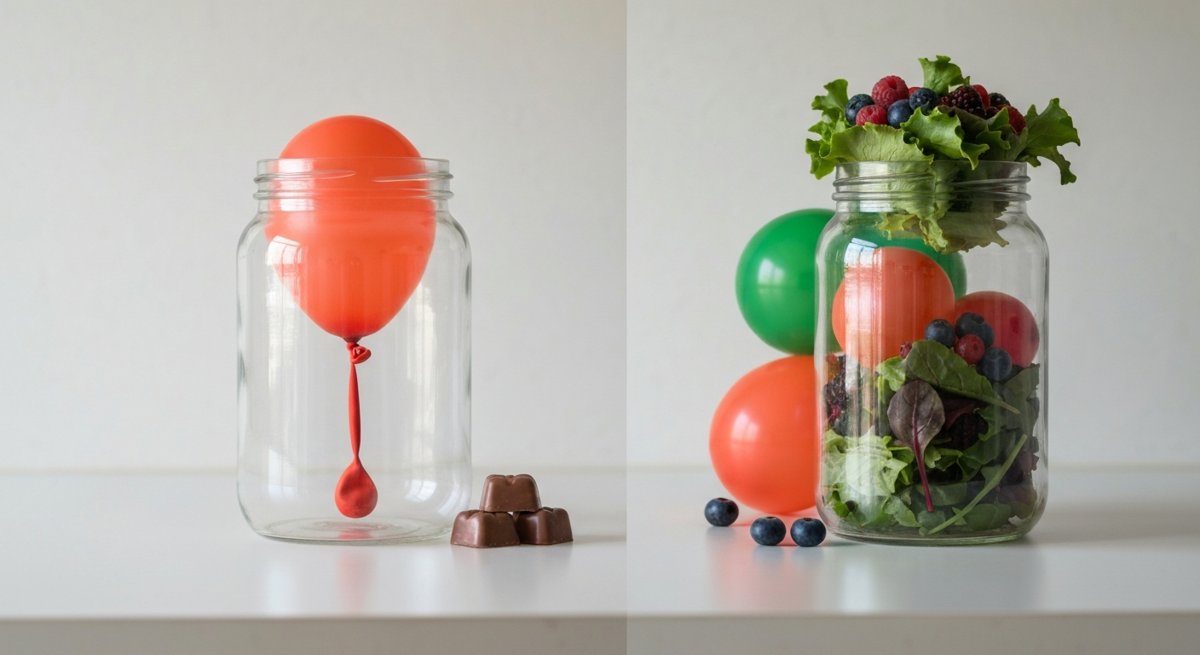
Most people think of fat as a substance you “burn off.” It’s more accurate to think of fat cells as billions of tiny balloons. When you eat more than you use, each balloon inflates with triglycerides. When you eat less than you use, each balloon deflates. The balloons themselves don’t go away — they just change size.
An average adult has roughly 30 billion fat cells. Someone who has been significantly overweight can have 100 billion or more. That difference matters, and we’ll get to why.
Phase 1: Hypertrophy — Cells Get Bigger
When you start gaining weight, your existing fat cells absorb more triglycerides and expand. A single fat cell can swell to roughly 4-6 times its lean volume. This is the primary mechanism behind most weight gain.
The good news: this is fully reversible. Eat less than you burn, and these cells shrink right back down. No permanent damage done.
Phase 2: Hyperplasia — New Cells Are Born
Here’s where it gets serious. When your existing fat cells hit their storage limit — roughly 0.7-0.8 micrograms of lipid per cell — they send out chemical distress signals. These signals trigger stem cells (pre-adipocytes) to differentiate into brand new fat cells.
This typically kicks in when men exceed roughly 25-30% body fat, though genetics, fat distribution, and how long you’ve been at that weight all play a role.
The critical part: once new fat cells are created, you cannot lose them through diet or exercise. You can only shrink them. They sit there, empty and waiting, sending “fill me” signals that make weight regain easier. This is a major reason why people who were once significantly overweight have a harder time maintaining weight loss than people who were never heavy.
The Numbers — Where Are You?
Here’s a rough framework for men (women carry ~8-10% more body fat at equivalent fitness levels):
- 15-20% body fat: Healthy range. Your existing cells are comfortably filled, no hyperplasia risk. Weight loss from here is straightforward — you’re just deflating balloons.
- 20-25% body fat: Overfilled but manageable. Still mostly hypertrophy. Cells are stretched but not maxed out. This is the most responsive range for diet changes.
- 25-30% body fat: Approaching the threshold. Cells are near capacity. The longer you stay here, the higher the risk of triggering new cell creation. This is the “act now” zone.
- 30%+ body fat: Hyperplasia is likely active, especially if you’ve been here for months or years. Weight loss is still absolutely possible, but your body is building infrastructure that will fight you on the way back down.
Quick estimate: if you know your lean target weight (what you’d weigh at 15% body fat), subtract that from your current weight, divide by current weight, and multiply by 100. That’s your approximate body fat percentage. It’s rough, but it gets you in the right zone.
What This Means for Your Diet
The science points to one clear strategy: don’t stay overfilled for long periods. Brief spikes in weight (holidays, vacations, stressful months) are fine — your cells inflate and deflate without creating new ones. It’s the sustained, months-long surplus that triggers hyperplasia.
But “eat less” is useless advice if you’re hungry all the time. The real answer is volume eating — foods that fill your stomach and keep you satisfied while delivering fewer calories per bite.
Volume Eating: Big Plates, Small Calories
Your stomach doesn’t count calories. It measures volume and weight. Stretch receptors in your stomach wall tell your brain “I’m full” based on how much physical space the food takes up — not how many calories it contains. This is the cheat code.
The High-Volume Playbook
- Cruciferous vegetables: Broccoli, cauliflower, Brussels sprouts, cabbage. A full pound of broccoli is only 150 calories but fills an entire plate. Roast with garlic and olive oil for flavor without going overboard.
- Leafy greens: Spinach, kale, arugula. An enormous salad bowl is 30-50 calories before dressing. Use vinaigrette instead of ranch and you stay under 150 for a meal-sized salad.
- Lean proteins: Chicken breast, turkey, white fish, shrimp, egg whites. High satiety, moderate calories. 8 oz of chicken breast is ~280 calories and keeps you full for hours.
- Potatoes (yes, potatoes): The most satiating food ever measured on the Satiety Index. A large baked potato is ~280 calories and will keep you fuller than almost anything else you can eat. Skip the butter and sour cream — use Greek yogurt and hot sauce instead.
- Soups and stews: Water adds volume without calories. A giant bowl of chicken vegetable soup can be 200-300 calories and feel like a feast. This is the ultimate meal-prep food.
- Berries: Strawberries, blueberries, raspberries. A full cup of strawberries is 50 calories. Compare that to a banana at 100+ or grapes at 100+.
- Greek yogurt: High protein, thick texture, very satiating. 200g of non-fat Greek yogurt is ~130 calories with 20g of protein.
- Popcorn (air-popped): 3 cups of air-popped popcorn is 90 calories. That’s a large bowl for the calorie cost of a single handful of chips.
The Calorie Density Trick
Think in terms of calories per pound:
- Vegetables: 60-200 cal/lb
- Fruits: 200-350 cal/lb
- Potatoes, rice, beans: 400-600 cal/lb
- Lean meat, fish: 500-700 cal/lb
- Bread, pasta: 1,200-1,500 cal/lb
- Cheese: 1,600-1,800 cal/lb
- Nuts: 2,500-3,000 cal/lb
- Oils, butter: 4,000 cal/lb
Build your plates from the top of this list. The lower you go, the smaller your portions need to be.
Meal Prep That Actually Works
Volume eating is perfect for meal prep because the base ingredients are cheap, keep well, and cook in bulk.
- Sunday protein cook: Grill or bake 3-4 lbs of chicken breast, portion into containers. Season differently (lemon herb, cajun, teriyaki) to avoid monotony.
- Big-batch soups: Make a pot of chicken vegetable, turkey chili, or lentil soup. Portions into 5 containers. Reheats perfectly all week.
- Roasted vegetable trays: Sheet-pan roast a mix of broccoli, bell peppers, zucchini, and sweet potato. 400°F, 25 minutes. Makes 4-5 side portions.
- Overnight oats: Rolled oats, Greek yogurt, berries, splash of almond milk. Prep 5 jars Sunday night. Grab and go all week. ~300 calories per jar with 20g+ protein.
- Egg muffins: Whisk eggs with spinach, peppers, turkey sausage. Pour into muffin tins, bake at 375°F for 20 minutes. 12 muffins = 3-4 days of grab-and-go breakfasts at ~70 calories each.
The key to sustainable meal prep: cook the protein and base vegetables in bulk, vary the sauces and seasonings daily. Same chicken breast tastes completely different with salsa verde vs. mustard vs. soy-ginger glaze.
For more meal prep ideas, recipes, and detailed macros, check out our growing recipe collection — we’ll be adding new volume-friendly recipes regularly.
The science is clear: your fat cells are permanent residents, but their size is negotiable. Fill your plates with volume, keep your cells from maxing out, and the biology works in your favor.
— BaseCampGoods
Nutrition & Meal Prep · basecampgoods.com