

You’re standing in the supplement aisle staring at a wall of brightly colored electrolyte packets — Liquid IV, LMNT, Drip Drop — each one promising to “optimize your hydration” for the low price of two bucks a serving. Maybe more.
Here’s the thing: you’re paying for marketing. The ingredients in those packets cost almost nothing. And once you understand what electrolytes actually are and what your body needs, you can mix your own at home in about 90 seconds for roughly 5 to 8 cents a serving.
This isn’t some weird biohacker trick. It’s basic chemistry that athletes, hikers, and field medics have used for decades. Let me show you exactly how to do it.
Why Electrolytes Matter (The 30-Second Version)
Your muscles, nerves, and heart run on electrical signals. Those signals depend on four key minerals dissolved in your blood and cells:
- Sodium — the big one. You lose the most of this in sweat. Without enough, you cramp, get dizzy, and your performance tanks.
- Potassium — works alongside sodium for muscle contraction and fluid balance.
- Magnesium — involved in 300+ enzymatic reactions. Low magnesium means poor recovery, bad sleep, and muscle twitches.
- Calcium — you get plenty from food. Not usually the one you need to supplement in a drink.
That’s it. That’s the formula those $2 packets are built around. Sodium, potassium, maybe some magnesium, and a sweetener to make it drinkable. You already have most of this in your kitchen.
The Base Recipe: Everyday Electrolyte Drink
This is your daily driver. Good for workouts, hot days, yard work, hiking — any time you’re sweating.
Per 32 oz (1 quart) of water:
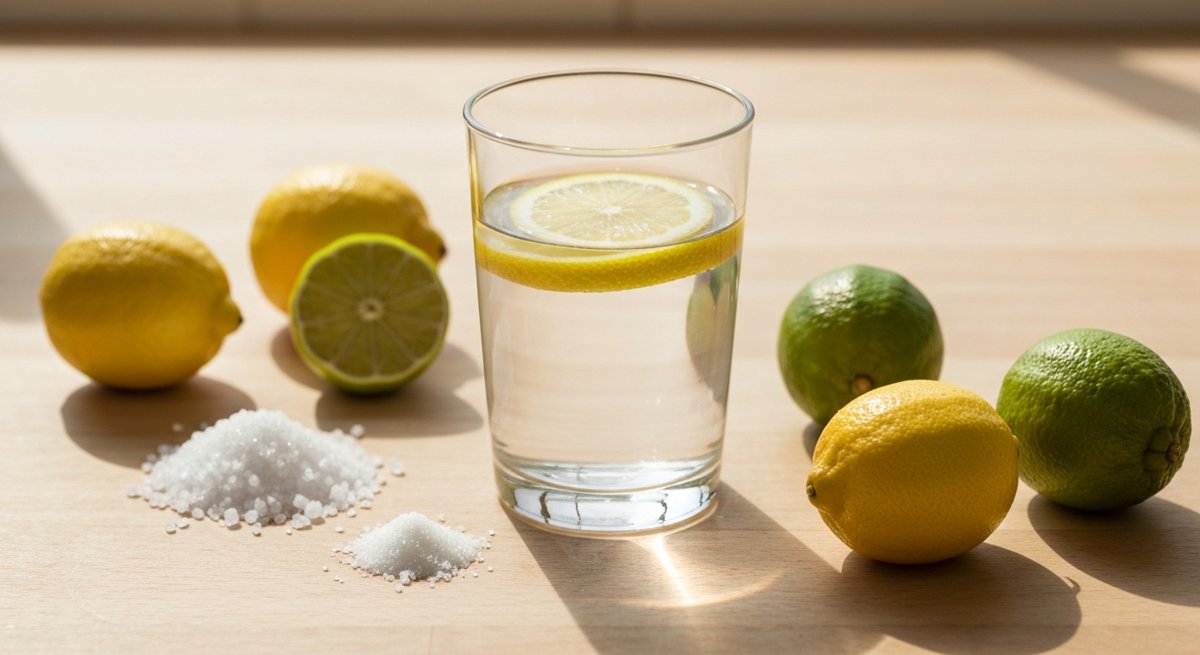
- ¼ teaspoon sea salt (about 575mg sodium)
- ⅛ teaspoon salt substitute like Nu-Salt or Morton Lite Salt (about 350mg potassium)
- 1 tablespoon honey or maple syrup (just enough glucose to aid absorption)
- Juice of ½ lemon or lime (flavor + a little extra potassium)
Stir it up. That’s it. Total cost per serving: somewhere between a nickel and a dime, depending on what you already have on hand.
My honest take: Does it taste as good as a watermelon LMNT packet? No. It tastes like slightly salty lemonade. But you know what? It works exactly the same — arguably better, because you can dial in the ratios to YOUR sweat rate and YOUR activity level instead of trusting a one-size-fits-all packet designed for the average person who doesn’t exist.
Level Up: The Heavy Sweat Formula
If you’re training hard, working outside in Texas summer heat, or rucking under load, you need more. Here’s the stepped-up version:
Per 32 oz of water:
- ½ teaspoon sea salt (~1,150mg sodium)
- ¼ teaspoon salt substitute (~700mg potassium)
- 1 tablespoon honey
- Juice of 1 full lemon
- Pinch of food-grade magnesium citrate powder (optional but recommended — about 200mg)
The magnesium is the one upgrade worth spending a few bucks on. A bag of magnesium citrate powder runs about $12-15 and will last you months. If you’ve ever had leg cramps at night after a hard day, low magnesium is almost always the culprit.
The Shelf-Stable Trail Mix: Make It in Bulk
This is where it gets really practical. You can pre-mix a dry electrolyte powder that stores indefinitely and goes anywhere — your pack, your truck, your go-bag.
Dry Mix (makes ~30 servings):
- 2 tablespoons fine sea salt
- 1 tablespoon salt substitute (potassium chloride)
- 1 teaspoon magnesium citrate powder
- 3 tablespoons sugar or powdered drink mix (optional — for flavor and glucose transport)
Mix it all together, store in a small mason jar or ziplock bag. One level teaspoon per 32 oz of water. Done. Throw a few single-serving baggies in your kit and you’ve got electrolytes for a week-long trip that weighs almost nothing and cost you about two dollars total.
If you want to get fancy with flavor, mix in powdered lemon juice or unsweetened Kool-Aid powder. Or just squeeze citrus at camp — it’s better fresh anyway.
The Math: How Much Are You Really Saving?
Let’s be real about this because I think the numbers speak for themselves:
| Option | Cost/Serving | Cost/Month (1/day) |
|---|---|---|
| LMNT | $1.75 – $2.00 | $52 – $60 |
| Liquid IV | $1.25 – $1.50 | $37 – $45 |
| Drip Drop | $1.00 – $1.25 | $30 – $37 |
| DIY Mix | $0.05 – $0.08 | $1.50 – $2.40 |
That’s roughly $500 to $700 per year back in your pocket if you’re a daily electrolyte user. And a lot of active people are — especially in the summer, especially if you’re training, working outdoors, or just trying to stay sharp.
When Commercial Packets Make Sense
I’m not going to pretend there’s zero reason to buy pre-made electrolyte mixes. Convenience is real. If you’re traveling and don’t want to carry a jar of salt mix through TSA, grab some packets. If you genuinely can’t stand the taste of the DIY version and it means you won’t drink it, then a packet you actually use beats a homemade mix you leave in the cabinet.
But for daily use at home, at the gym, or out in the field? Making your own is a no-brainer. You control the ingredients, you know exactly what’s in it (no maltodextrin, no “natural flavors,” no stevia aftertaste), and you save a stupid amount of money.
A Quick Word on “But Is Salt Bad for You?”
If you’re active, almost certainly not. The fear of sodium is based on studies of sedentary people eating processed food. If you’re sweating regularly — training, working outside, rucking — you’re losing 1,000-2,000mg of sodium per hour through sweat. You need to replace it. Under-hydration with electrolyte imbalance is a far more common problem for active people than too much salt.
That said, if you have a specific medical condition (kidney disease, hypertension managed with medication), talk to your doctor before significantly increasing sodium intake. Common sense applies.
Your Challenge This Week
Make one batch. That’s it. Mix up the base recipe before your next workout or your next day working outside. See how you feel compared to plain water. Most people notice the difference immediately — less fatigue, fewer cramps, better focus in the heat.
Then make the bulk dry mix and stash some in your gym bag, your truck, and your pack. Once you see how easy and cheap it is, you’ll never look at a $2 electrolyte packet the same way again.
The bottom line: Electrolytes aren’t complicated, and they don’t need to be expensive. Four ingredients, 90 seconds, pennies a serving. Stop paying the marketing tax. Your body doesn’t care about the packaging — it cares about the sodium, potassium, and magnesium. Give it what it needs.