

It’s June. The ground is warm, the grass is high, and every snake in North America is awake, hungry, and moving. If you spend any time outdoors — hiking, working a property, clearing brush, or just reaching into a woodpile — you will cross paths with one eventually. And almost everything Hollywood taught you about what to do next is wrong. Some of it is just useless. Some of it will get a limb amputated.
Here’s the real playbook — the stuff that actually keeps fingers, feet, and lives intact.
Know What Bit You (It Probably Wasn’t Lethal)
Roughly 7,000–8,000 people get bitten by venomous snakes in the U.S. every year. About 5 die. Read that again. With prompt hospital care, a snakebite in this country is almost never a death sentence — but it can wreck the tissue around the bite if you do something dumb in the first 30 minutes.
Two families matter here:
- Pit vipers — copperheads, cottonmouths (water moccasins), and rattlesnakes. This is the overwhelming majority of U.S. bites. Their venom is mostly hemotoxic: it destroys tissue and messes with your blood’s ability to clot. You’ll see swelling, bruising, and serious pain fast.
- Coral snakes — rare, shy, small-mouthed, and found mostly in the Southeast. Their venom is neurotoxic — it attacks the nervous system, and symptoms can be sneaky and delayed. Remember the rhyme: “Red touches yellow, kills a fellow.” This is the one exception that changes the first-aid rules (more on that below).
My honest take: if you live in most of the country, your realistic threat is a copperhead, and a copperhead bite is the snake world’s equivalent of a bad bee sting that lands you in the ER for observation. Painful, scary, rarely catastrophic. Don’t panic — panic is what makes people do the stupid stuff.
What to Actually DO
- Back away. Most bites happen when people try to handle, kill, or “get a better look” at the snake. Give it five feet and it loses all interest in you.
- Call 911 or get moving to a hospital — now. Antivenom (CroFab or Anavip for pit vipers) is the actual treatment, and it works best early. Time is tissue.
- Take off rings, watches, and tight clothing near the bite immediately. That limb is going to swell, and you do not want a wedding band acting as a tourniquet on a finger in 20 minutes.
- Keep still and keep the limb roughly at heart level. Lower your heart rate, slow the venom’s spread. Walk only if you have to in order to reach help.
- Mark the swelling. Take a pen and draw a line at the leading edge of the swelling, write the time next to it, and repeat every 15–30 minutes. This gives the ER a precise timeline of how fast the venom is progressing. It’s the single most useful thing a bystander can do, and it costs nothing but a Sharpie.
- Snap one photo from a safe distance if the snake is still around — but never delay treatment or risk a second bite to do it. The hospital does not need the actual snake to treat you.
What Movies Got Dead Wrong
Every one of these has been studied, and every one of these is either useless or actively harmful. Burn them out of your brain:
- Cut and suck. No. Cutting the wound spreads damage and invites infection, and your mouth is a bacterial swamp. You’ll remove a trivial amount of venom and add a nasty infection on top of envenomation.
- Suction devices (the Sawyer Extractor pump). Famous, widely sold, and proven worthless. Peer-reviewed studies show these pumps remove a negligible amount of venom — and may worsen local tissue damage at the suction site. Don’t waste pack space on one.
- Tourniquets. This is the one that costs people their limbs. Cutting off all blood flow concentrates hemotoxic venom in one spot and turns “swollen hand” into “dead hand that gets amputated.” Do not apply a tourniquet to a pit viper bite. Ever.
- Ice. Cold constricts blood vessels and concentrates venom in already-damaged tissue. It makes the local destruction worse, not better.
- The shot of whiskey. Alcohol speeds circulation and dehydrates you — exactly backwards. Same goes for caffeine.
- Aspirin or ibuprofen for the pain. Pit viper venom already attacks your clotting. NSAIDs thin the blood further. If you need something for pain, acetaminophen (Tylenol) is the safer choice — but let the ER guide you.
- Electric shock. Yes, this was a real “remedy” people tried with car batteries and stun guns. It does nothing but burn you. I wish I were joking.
The One Exception: Coral Snakes
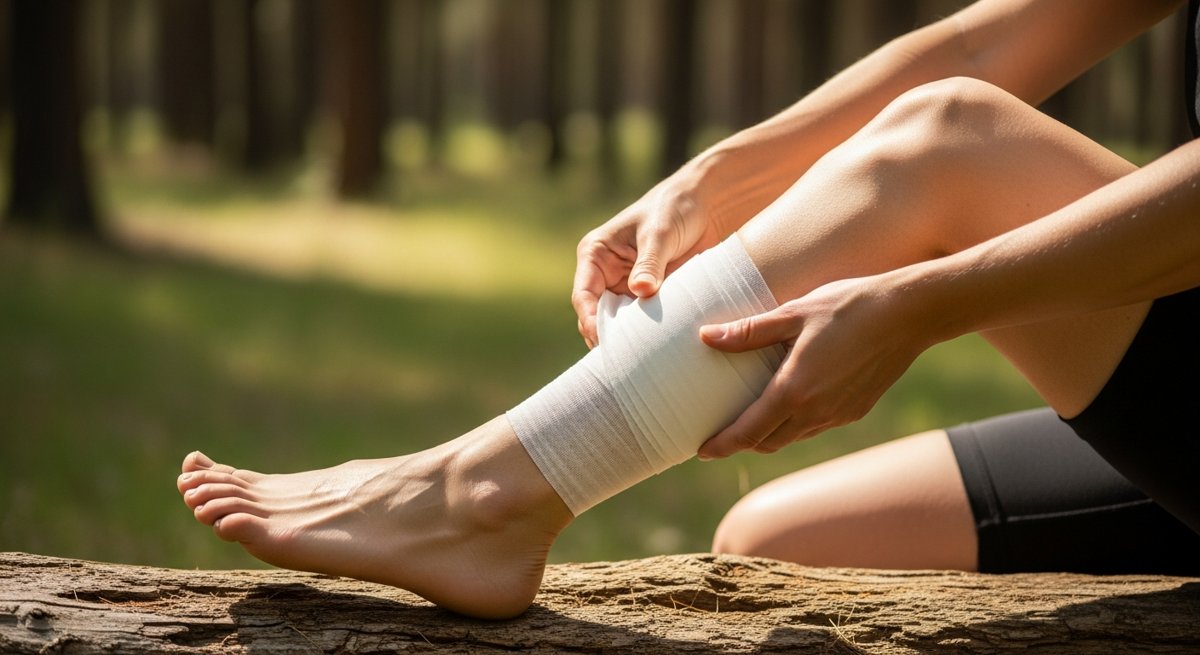
Here’s where it gets nuanced, and where bad blanket advice gets dangerous. For neurotoxic bites — coral snakes specifically — the pressure immobilization technique (a firm, wide elastic wrap over the bite and up the limb, splinted to keep it still) can slow the spread of venom and is genuinely recommended.
But you must NOT use pressure immobilization on a pit viper bite. Wrapping a copperhead or rattlesnake bite traps the tissue-destroying venom locally and makes the damage far worse. So the rule is simple: if you’re not 100% certain it was a coral snake, treat it as a pit viper and skip the wrap. When in doubt, don’t wrap — just get to the hospital.
Gear That Actually Helps
Snakebite first aid is mostly about not doing things, so the gear list is short and honest:
- A real trauma kit. Not for the bite itself — for the brush cuts, the splinting, and having a marker and gloves on hand when something goes sideways in the field. The Adventure Medical Kits MOLLE Trauma Kit 1.0 is a solid, compact one that lives in my truck and pack. Just remember: the tourniquet inside it is for arterial bleeding from trauma, never for a snakebite.
- Snake gaiters. Far and away the best money you can spend if you work tall grass or rocky country. Most copperhead and rattlesnake strikes land below the knee, and a good pair of gaiters stops the fangs cold. Brands like ForEverlast SnakeGuard and Crackshot make proven, field-tested pairs. This is prevention beating cure — wear them when you’re clearing brush or walking unknown ground.
- A permanent marker. The humble Sharpie is more useful in a real bite than any gimmick suction pump ever made. Put one in every kit.
- Your phone, charged. Calling ahead so the ER can have antivenom ready is worth more than anything in your pack.
Prevention Beats All of It
The best snakebite first aid is the bite that never happens. Watch where you put your hands and feet. Don’t reach blindly into woodpiles, rock crevices, or tall grass. Step on logs and then over, never blindly over. Use a light at night — snakes love warm summer evenings. Keep your yard’s grass cut and the brush piles away from the house. And teach your kids the same: look before you reach.
The Takeaway
If you remember nothing else, remember this short list: back away, take off the jewelry, stay calm, mark the swelling, and get to a hospital. Don’t cut, don’t suck, don’t wrap (unless it’s a confirmed coral snake), don’t ice, don’t tourniquet. The venom is rarely the thing that hurts people worst — the panic-driven “remedies” are.
Your challenge this week: find out which venomous snakes actually live in your county — it’s a two-minute search — and put a permanent marker in your hiking pack and your truck kit tonight. Two minutes and a Sharpie is a better snakebite plan than 90% of the people you’ll ever meet on a trail.
This is field first-aid guidance, not medical advice. Any venomous snakebite is a medical emergency — call 911 or get to an emergency room immediately.